Dos and Don’ts For Decorating Your Rental Apartment

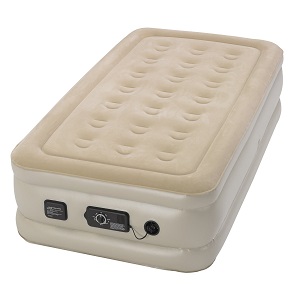
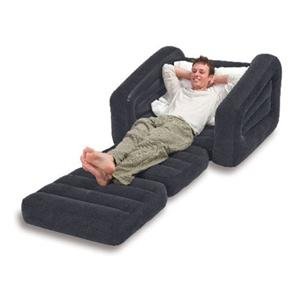
There are so many uses for a twin size inflatable air mattress; use in the home to sleep close to the bed of someone sick that you are carrying for, use as extra bed for children while in a hotel room, use an air mattress for extra guest in your home, use in a tent while camping, etc.

An inflatable air mattress is easy to store, easy to setup, easy to transport and very comfortable.

Decorating a Rental Apartment

Those who live in a rental apartment are usually quite limited in the amount of decorating they are able to do. This can have the impact of making a rental apartment not quite feel like a real home. In many cases the rental apartment is painted a bright white and residents often feel as though this color is somewhat impersonal but are not able to repaint the walls to a more appealing color. This is just one example of the decorating restrictions which may be placed on an individual renting an apartment. There may be other restrictions and reading the contract carefully will help the renter to determine what is allowed and what is not allowed.

Review the Contract Carefully

Renters who are living in an apartment should review their contract documents carefully before they begin decorating their apartment. This is important because there may be some common decorating items such as painting or installation of shelving which may not be allowed by the contract documents. Decorating in any manner which is strictly prohibited may result in harsh penalties. These penalties might involve the assessment of fees at the conclusion of the rental period or possibly even eviction.

Most standard decorating items such as hanging pictures are usually acceptable but some particularly strict policies may either prohibit this completely or place restrictions on the type of nails which may be used or the methods of patching the holes. Renters who have questions regarding whether or not specific decorating actions are permissible or prohibited should contact their leasing agent before taking action. This will help to ensure the renter is not penalized in the future for their actions.

Additionally, if the leasing agent tells the renter it is acceptable to perform an action prohibited by the rental agreement, the renter should always ask for a signed, written document stating the exception to the contract. This is helpful because the leasing agent may not remember making an exception to the rule or may not even still be working at the property when the renter’s lease expires.

Consider Whether or Not Modifications are Reversible

When renters in an apartment living situation are making decorating decisions, one of the most important factors to consider is whether or not a modification to the apartment is reversible. In most cases, the action is likely to be permissible as long as it is easily reversible. However, the case of painting the apartment is a common exception to this rule. Although painting can easily be reversed, most apartment complexes due not allow residents to pain the apartment in which they reside. This is because although painting is often reversible, the process of returning the wall to the original color is not always easy.
Irreversible modifications such as removing walls or adding permanent fixtures to the apartment are typically not considered acceptable when decorating a rental apartment. Although even major modifications are typically not completely irreversible, most leasing agents would consider modifications which require the assistance of a general contract to be permanent in nature. Conversely, small modifications such as nail holes to hang pictures are considered reversible because they can easily be corrected. Again, if the renter is unsure of whether or not an action is permissible, they should seek clarification from the leasing agent.

Consider the Security Deposit

Most renters pay a security deposit before they take possession of the apartment. This security deposit is collected to protect against damages which may be caused by the renter during the course of the rental agreement. The leasing agent may expect to need to do some minor cleaning or a few small repairs after the renter vacates the premises. However, a deposit large enough to cover the cost of more significant repairs is often collected to provide the leasing agent with some protection in case the renter damages the apartment and leaves it in need of considerable repair.

Browse More Twin Size Inflatable Air Bed Mattress Solutions For You or Your Guests
Guest Bed Solutions, Twin Size Inflatable Air Bed Mattress

Sleep During Infancy and Early Childhood

Sleep During Infancy

For three or four weeks after birth the infant sleeps more or less, day and night, only waking to satisfy the demands of hunger; at the expiration of this time, however, each interval of wakefulness grows longer, so that it sleeps less frequently, but for longer periods at a time.

This disposition to repose in the early weeks of the infant’s life must not be interfered with; but this period having expired, great care is necessary to induce regularity in its hours of sleep, otherwise too much will be taken in the day-time, and restless and disturbed nights will follow. The child should be brought into the habit of sleeping in the middle of the day, before its dinner, and for about two hours, more or less. If put to rest at a later period of the day, it will invariably cause a bad night.

At first the infant should sleep with its parent. The low temperature of its body, and its small power of generating heat, render this necessary. If it should happen, however, that the child has disturbed and restless nights, it must immediately be removed to the bed and care of another female, to be brought to its mother at an early hour in the morning, for the purpose of being nursed. This is necessary for the preservation of the mother’s health, which through sleepless nights would of course be soon deranged, and the infant would also suffer from the influence which such deranged health would have upon the milk.

When a month or six weeks has elapsed, the child, if healthy, may sleep alone in a cradle or cot, care being taken that it has a sufficiency of clothing, that the room in which it is placed is sufficiently warm, viz. 60 degrees, and the position of the cot itself is not such as to be exposed to currents of cold air. It is essentially necessary to attend to these points, since the faculty of producing heat, and consequently the power of maintaining the temperature, is less during sleep than at any other time, and therefore exposure to cold is especially injurious. It is but too frequently the case that inflammation of some internal organ will occur under such circumstances, without the true source of the disease ever being suspected. Here, however, a frequent error must be guarded against, that of covering up the infant in its cot with too much clothing throwing over its face the muslin handkerchief and, last of all, drawing the drapery of the bed closely together. The object is to keep the infant sufficiently warm with pure air; it therefore ought to have free access to its mouth, and the atmosphere of the whole room should be kept sufficiently warm to allow the child to breathe it freely: in winter, therefore, there must always be a fire in the nursery.

The child up to two years old, at least, should sleep upon a feather bed, for the reasons referred to above. The pillow, however, after the sixth month, should be made of horsehair; for at this time teething commences, and it is highly important that the head should be kept cool.

Sleep During childhood

Up to the third or fourth year the child should be permitted to sleep for an hour or so before its dinner. After this time it may gradually be discontinued; but it must be recollected, that during the whole period of childhood more sleep is required than in adult age. The child, therefore, should be put to rest every evening between seven and eight; and if it be in health it will sleep soundly until the following morning. No definite rule, however, can be laid down in reference to the number of hours of sleep to be allowed; for one will require more or less than another.Regularity as to the time of going to rest is the chief point to attend to; permit nothing to interfere with it, and then only let the child sleep without disturbance, until it awakes of its own accord on the following morning, and it will have had sufficient rest.

The amount of sleep necessary to preserve health varies according to the state of the body, and the habits of the individual. Infants pass much the greater portion of their time in sleep. Children sleep twelve or fourteen hours. The schoolboy generally ten. In youth, a third part of the twenty-four hours is spent in sleep. Whilst, in advanced age, many do not spend more than four, five, or six hours in sleep.

It is a cruel thing for a mother to sacrifice her child’s health that she may indulge her own vanity, and yet how often is this done in reference to sleep. An evening party is to assemble, and the little child is kept up for hours beyond its stated time for retiring to rest, that it may be exhibited, fondled, and admired. Its usual portion of sleep is thus abridged, and, from the previous excitement, what little he does obtain, is broken and unrefreshing, and he rises on the morrow wearied and exhausted.

Once awake, it should not be permitted to lie longer in bed, but should be encouraged to arise immediately. This is the way to bring about the habit of early rising, which prevents many serious evils to which parents are not sufficiently alive, promotes both mental and corporeal health, and of all habits is said to be the most conducive to longevity.

A child should never be suddenly aroused from sleep; it excites the brain, quickens the action of the heart, and, if often repeated, serious consequences would result. The change of sleeping to waking should always be gradual.

The bed on which the child now sleeps should be a mattress: at this age a feather bed is always injurious to children; for the body, sinking deep into the bed, is completely buried in feathers, and the unnatural degree of warmth thus produced relaxes and weakens the system, particularly the skin, and renders the child unusually susceptible to the impressions of cold. Then, instead of the bed being made up in the morning as soon as vacated, and while still saturated with the nocturnal exhalations from the body, the bed-clothes should be thrown over the backs of chairs, the mattress shaken well up, and the window thrown open for several hours, so that the apartment shall be thoroughly ventilated. It is also indispensably requisite not to allow the child to sleep with persons in bad health, or who are far advanced in life; if possible, it should sleep alone.

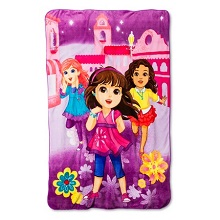
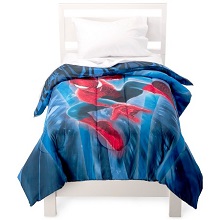
Browse Additional Selections of Kids Warm, Plush Character Bedding, Blankets, and Throws for Boys and Girls
View Kids Character Bedding, Blankets, Throws for Boys and Girls